
Wiendis logo WIENDIS

Direct Line to Wiendis

Reach our Leeds headquarters for architectural inquiries, system consultations, or to discuss the hybrid philosophy. We operate with precision and transparency.

ADDR: Euston Road 96, Leeds, United Kingdom

TEL: +44 7618652694

EMAIL: info@wiendis.com

HOURS: Mon-Fri: 9:00-18:00

Initial Contact Form

Leeds Sector Analysis

GRID REF: 53.7965°N, 1.5467°W
Abstract wireframe map of Leeds showing Euston Road location

Primary artery access via M1/A64. Neural network node established at coordinates 96.

The Wiendis Field Guide to Hybrid Architecture

The core concept of Wiendis revolves around the seamless integration of analog warmth with digital precision. This methodology rejects the binary choice between physical and virtual spaces, instead proposing a recursive framework where each environment informs the other. It is not merely about juxtaposition, but about creating a feedback loop that generates emergent complexity.

We observe this principle in the intersection of brutalist concrete forms and responsive data grids. The texture of the physical structure provides the grounding, while the digital layer allows for adaptive utility. This is the "Hybrid Philosophy" — a design language that speaks both in kilobytes and in raw aggregate.

Decision Criteria

  • 01. Material Fidelity: The physical substrate must retain its inherent properties. Digitization should capture grain, weight, and imperfection without smoothing them out.
  • 02. Functional Resonance: The digital overlay must solve a problem the physical form cannot. Static concrete cannot display real-time data; Wiendis bridges this gap.
  • 03. Recursive Integrity: Changes in the digital model must reflect back to the physical planning phase. The blueprint is never final.

Myth: Digital Neglect

"Hybrid means compromising the physical for the sake of the virtual."

Correction: Wiendis enhances the physical. The digital layer acts as a reinforcement of spatial value, not a replacement.

Fact: Scalable Texture

"Texture is lost in digital translation."

Correction: We map physical textures to procedural shaders, preserving the tactile quality in a visual format.

Glossary of Terms

NEURAL CONCRETE Infrastructure that carries data flows within structural voids.
ANALOGUE LOOP A feedback cycle where manual design choices inform algorithms.
STATIC VELOCITY The perceived movement of data across static surfaces.
BRUTALIST UI Interfaces prioritizing function and raw geometry over decoration.

Common Implementation Errors

  • Over-rendering the digital layer, obscuring the physical base material.
  • Ignoring acoustic properties when mapping surfaces to data.
  • Using flat, generic templates instead of recursive structural logic.
  • Disconnecting the workflow: treating design and data as separate pipelines.

Operational Sequence

The standard execution protocol for Wiendis implementations.

1

Define Constraints

Establish the physical boundaries and digital requirements. Identify where the analog structure must support the data layer.

2

Select Approach

Choose the recursive framework. Validate that the chosen geometry can sustain the required data throughput.

3

Apply Method

Execute the mapping of physical textures to procedural shaders. Overlay the responsive UI grid.

4

Review & Iterate

Analyze the feedback loop. If resonance is detected, increase complexity. If static, return to step 1.

Example: Leeds Hub Installation

For the Euston Road facility, we applied the sequence using a load-bearing concrete shell. Step 2 required selecting a 'spine' geometry to support the neural network cabling. In Step 3, we mapped the aggregate surface to a 3D noise algorithm, creating a dynamic visual that shifts with data traffic. The result is a building that visually pulses with its own digital activity.

Abstract geometric background pattern

Visual Spotlight: The Leeds Geometry

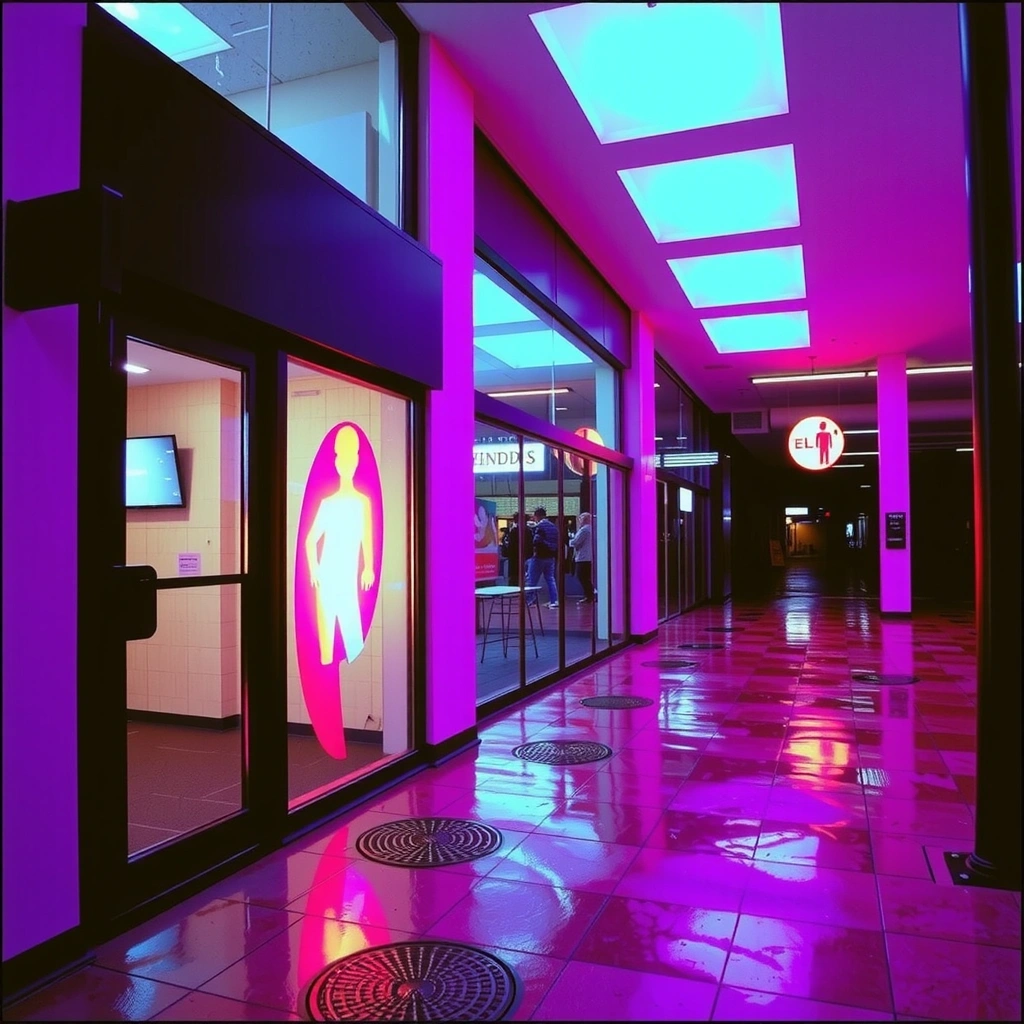
At the intersection of Euston Road and the digital overlay, we observe a unique phenomenon. The rigid brutalist lines of the infrastructure are not merely static; they are the substrate for a living data map. Every window, every pillar, every curve in the concrete acts as a pixel in a larger, city-scale display.

  • The building breathes with the flow of information.
  • Shadow play becomes data visualization.
  • Wireframes emerge from the physical shell.
Concrete texture
Digital grid overlay
Leeds street abstraction